
With the aim of improving knowledge about the companies in the Free Zone Industrial Park (PIZF), strengthening communication with the clients of the Consorci de la Zona Franca de Barcelona, and gathering data on sustainability indicators and the Sustainable Development Goals, a quantitative study is conducted every four years with the companies operating in the PIZF. Upon completion of the first part of the study, a qualitative phase is carried out, based on focus groups with employees and interviews with executive positions, to understand their needs and demands, as well as to delve deeper into strategic aspects such as innovation, the provision of added-value services, and gender equality.
All of this is done with the purpose of adapting and optimizing the Free Zone according to the demands of the different groups.
In the survey, conducted from 30 September to 29 November 2024, 121 out of the 189 companies in the PIZF participated, meaning that 68% of the study universe is represented in this quantitative survey.
The interviewed companies are mainly engaged, in this order, in industrial activity, logistics, business services, and public administration. Two-thirds have their main headquarters in Catalonia. Almost 60% are micro or small enterprises.
Here is the summary of the final reports:
Workforce Profile
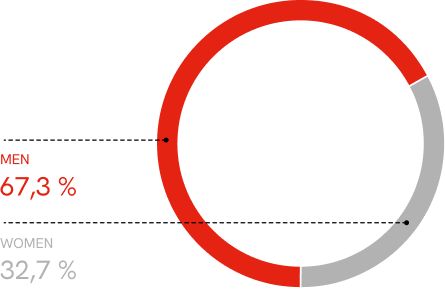
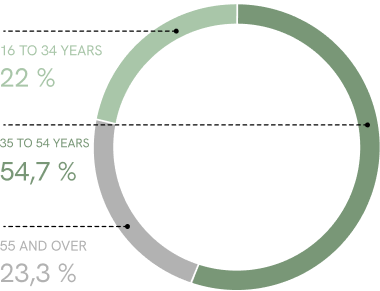
In the workforce, for every two men there is one woman. Slightly more than half are between 35 and 54 years old.
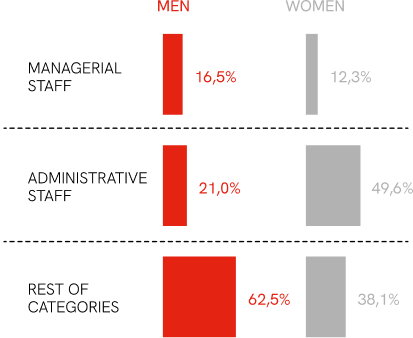
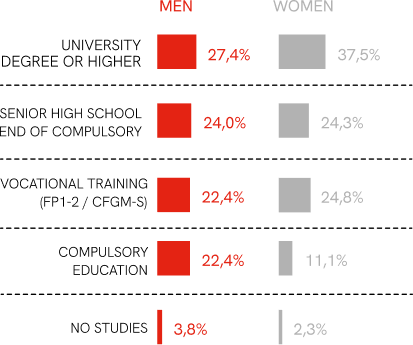
There are more women in administrative staff, and more men in other categories, although women have a higher level of education.
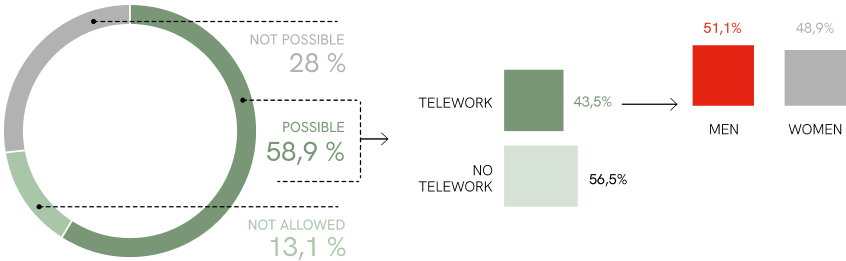
In nearly 60% of the companies, remote work is possible. In those companies, 43.5% of the workforce takes advantage of this option. People who telework consist of 51% men and 49% women.
Sustainable Development Goals
Hiring
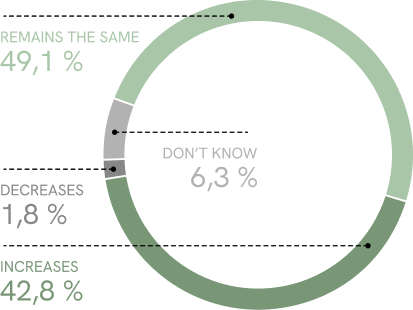
In the last two-three years, 43 % increased the hiring of women compared to previous periods.
Career progression
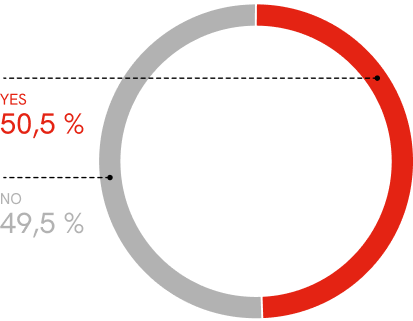
50 % have measures in place to promote women’s career progression. 65 % have an equality plan and a protocol against sexual harassment.
Functional diversity
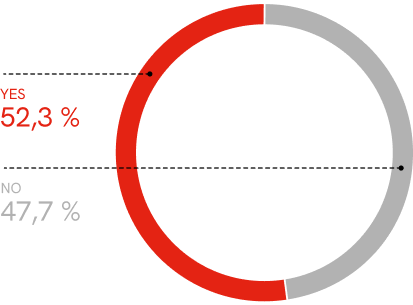
50 % have measures to hire people with functional diversity. 2.8 % have staff with disabilities in the workforce.
Certifications
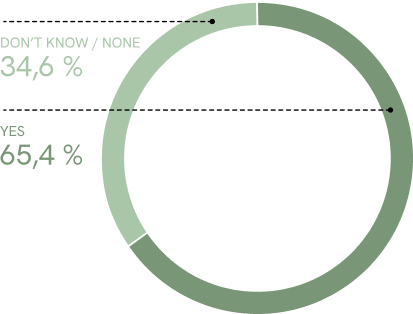
65 % have one or more certifications (mostly ISO 9001): 56.1 %)
Environmental indicators
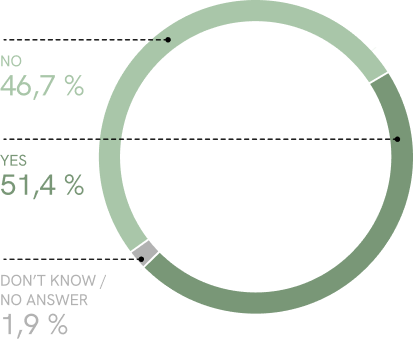
51 % prepare an environmental indicators report. Among these, 84% make it available to stakeholders.
Actions carried out in 2024
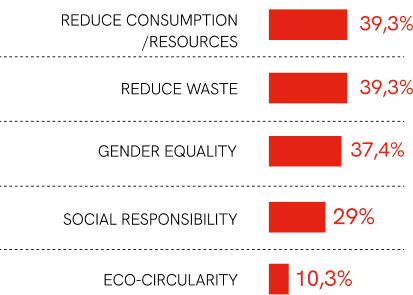
39 % carried out some sustainable development action during 2024, mainly reductions in consumption/resources, waste, and gender equality
Photovoltaic panel installation
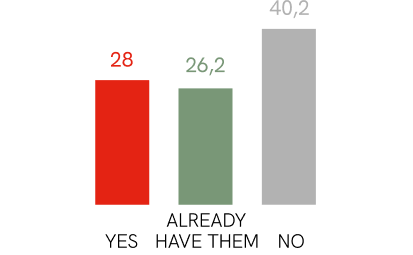
26 % have photovoltaic panels. 28 % want to install them, 40 % have no intention.
Participation in the Free Zone Sustainability Observatory
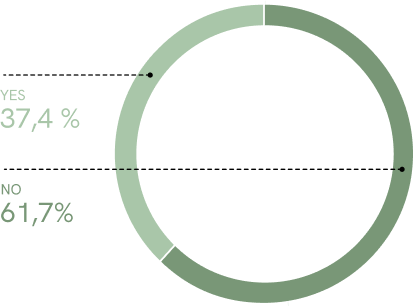
37 % express intention to participate in the sustainability observatory.
Electricity consumption
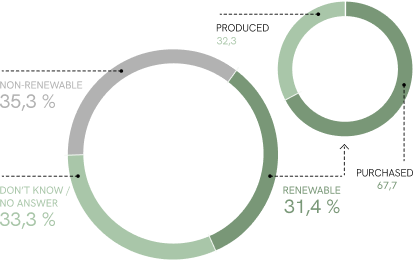
31 % of the electricity consumed is renewable, mostly purchased.
Evolution and Innovation Block
Sources of innovations
Innovations generally come from internal R&D departments and business collaboration.
71,6%
R&D
63,8%
Business Collaboration
Integration of emerging technologies
27 % HAVE FULLY INTEGRATED EMERGING TECHNOLOGIES, MAINLY BIG DATA (65 %). 21 % COLLABORATE WITH START-UPS
Do the companies have…?
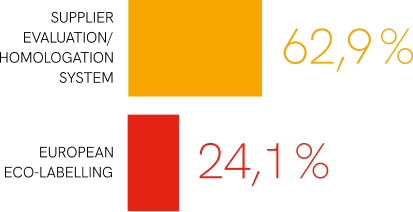
63 % have a supplier evaluation system. 24 % use eco-labelling.
Investment forecast 2025-2026
More than 37 % plan to invest in R&D technology.
29 % will launch new products
13.1 % will invest in Artificial Intelligence projects.
Difficulty in filling qualified positions
21.5 % find it very difficult to fill qualified positions. 51.4 % find it quite difficult.
21,5%
Do they have a training plan?
66 % of the companies have training needs. More than 75 % have a training plan.
66%
Implementation of dual vocational training
29 % have implemented Dual Vocational Training (FP Dual) in the workplace. 12 % are evaluating it.
29%
Block on the Industrial Park
Overall assessment of the industrial park
The overall rating obtained is significantly higher than in 2020. More than 55 % of companies rate it at least 8 out of 10.
7,40
Average score
Evaluation of aspects promoted/managed by the Consortium by the Consortium
Improvements compared to 2020 in:
Innovation
Sustainability
Work environment
Business synergies

Advantages and disadvantages of the Free Zone Industrial Park (spontaneous mentions)
More advantages than disadvantages are mentioned. Among the advantages, the standout is:
LOCATION 63,6 %
Among the disadvantages:
COMMUNICATIONS 51,2 %
INFRASTRUCTURE/SERVICES 47,1 %
Need for facilities, spaces, and services
The most frequently mentioned needs (standing out above the rest) are:
INCREASE IN THE SUPPLY OF RESTAURANTS
CREATION OF GREEN AREAS